Henry A. Parks


Passion and Mission.
I am driven by the responsible and intentional production of scientific knowledge through conducting a combination of data-driven and field-based studies, emphasizing consistent communication between domains. For responsible research, there must be consistent communication between field personnel and those who work with the data. My research interests and particular areas of science I enjoy working in are listed in the "Research Interests" tab.
Increasingly, I have become more passionate about education, outreach, and communication about wildlife ecology through a variety of lenses. A primary place I am interested in supporting is the education of students interested in wildlife ecology and connecting promising students with opportunities.

Education
2021 - 2025
B.S. in Fisheries, Wildlife, and Conservation Biology & Environmental Science, Policy, and Management
University of Minnesota - Twin Cities
Fisheries, Wildlife, and Conservation Biology - A focused degree aiming to address questions relating to changing wildlife/fisheries management landscapes and integrating animal biology and human dimensions for effective decision-making. Coursework focused on biological sciences, human dimensions, and quantitative skills.
Environmental Science, Policy, and Management - A holistic, broad program that aims to apply multiple lenses to important environmental problems including climate change, pollution, biodiversity declines, environmental justice, forestry, etc. Coursework focused on human dimensions work, biological/physical sciences, management-level intervention, and broader-scale problem-solving.



Chronic wasting disease (CWD) is a prevalent prion disease in white-tailed deer and other ungulate populations in the United States. Understand this disease's impacts on wild ungulates can inform management and surveillance efforts.
My responsibilities...
-
Maintain and monitor a grid of 50+ clover traps, rocket nets, and drop nets to pattern deer.
-
Capture, radio collar, and collect data from white-tailed deer using chemical immobilants.
-
Interact with private landowners and the public in a respectful manner represeting the study in a positive manner.
Pennsylvania Game Commission | Deer and Elk Section
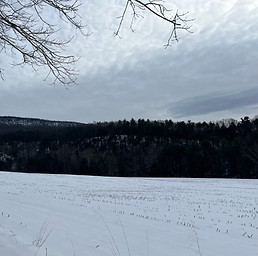
Bedford and Fulton County CWD Study




Wyoming Migration Initiative - University of Wyoming
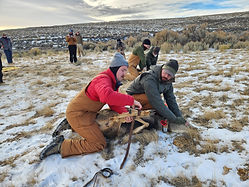
The Hoback to Red Desert Mule Deer Migration is the longest recorded mule deer migration in the world and the 2nd longest land migration in North America. Monitoring and understanding migrations like this involve using radio collars to track individuals and larger population along their migratory route.
My responsibilities...
-
Locate and conduct recruitment surveys of collared mule deer does to determine reproductive success.
-
Navigate mountainous terrain using 4x4 trucks, ATVs, and on foot.
-
Assist with capture of 70+ mule deer for collar adjustments and other data collection.
Fawn Climate Study
Mississippi State University, Minnesota Department of Natural Resources
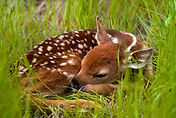
White-tailed deer fawns in South-central Minnesota experienced unique mortality sources during wet years, yet it is unknown if they change their space use to account for differential weather conditions. Currently, I am performing research as a post-baccalaureate attempting to relate fawn home range size dynamics to weather and climate variables. Stay tuned for a publication coming in the next couple of years!








Oklahoma Pronghorn Project
Oklahoma State University, Caesar Kleberg Wildlife Research Institute
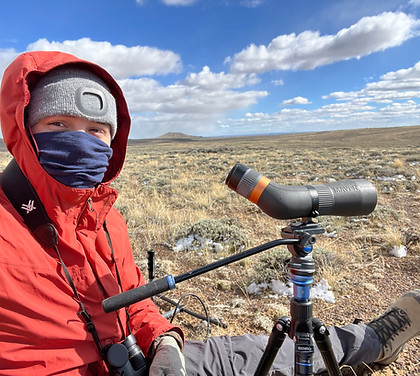
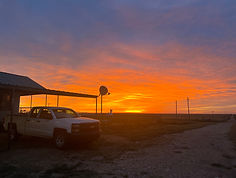
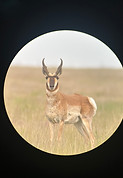
With declines in pronghorn populations in the Oklahoma panhandle, there is a demonstrated need for critical information related to the survival, reproduction, and movements of the species. This study, segmenting the pronghorn population into critical demographics, attempts to uncover the underlying population parameters needed to effectively manage this incredible species!
My responsibilities...
-
Conduct behavioral observations of does to determine pregnancy status and observe nursing events to locate fawns.
-
Capture and collect data from live fawns including genetic sample collection, radio collaring, and ear-tagging.
-
Conduct necropsies on pronghorn adults and fawns to determine cause-specific mortality.
Fisheries, Wildlife, and Conservation Biology Club

Department of Fisheries, Wildlife, and Conservation Biology
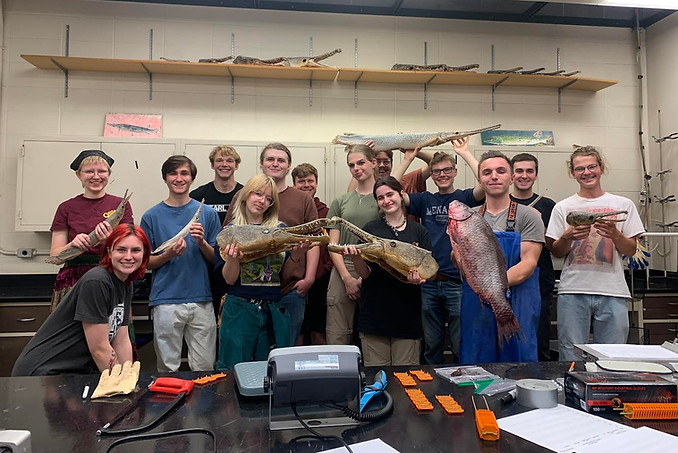
The Fisheries, Wildlife, and Conservation Biology Club is the University of Minnesota - Twin Cities Student Chapter of The Wildlife Society and the American Fisheries Society. I was the 2024-2025 President of the group and had the chance to collaborate on so many amazing opportunities to promote student growth, enable opportunity, and empower a next generation of wildlife and fisheries professionals!
My Responsibilities ...
-
Aided in club functions through financial activity support including pursuing grants, submitting taxes, and other financial responsibilities.
-
Communicated with professionals and the FWCB department to help organize and facilitate greater participation in club events.
-
Oversaw the operation of the club through the management of 9 interest-specific officers.
Heading 5
Urban Deer Movement Ecology
Forester Lab - Department of Fisheries, Wildlife, and Conservation Biology
Whitetail deer are a keystone wildlife species in urban areas - ongoing disease modeling efforts shows pathogens travelling through the Twin Cities Metro Area as they move north. Yet, we know very little about how deer use space in this area. My research is examining how urban deer use space and potential avenues for disease spread!
My Responsibilities ...
-
Conducting an ongoing study using spatial covariates to predict patterns of whitetail deer space use in the Twin Cities Metro.
-
Maintain a trail camera grid at Elm Creek Park that captures deer and other mammals.
-
Assist in adult whitetail deer captures to collar animals for movement studies.
-
Assist in the development of a trap line for urban coyotes and foxes to aid the Twin Cities Coyote and Fox Project.






Fawn Survival Study
Minnesota Department of Natural Resources
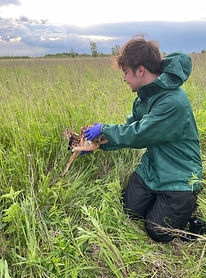
Whitetail deer experience the highest mortality risk during their first year of life - understanding which factors play the largest role in fawn mortality provides managers with mechanisms for controlling deer populations. This study attempts to uncover the significant factors of fawn mortality to provide managers with up-to-date information for deer in the farmland region of Minnesota.
My Responsibilities ...
-
Aided in the live capture, processing, and collaring of over 100 live whitetail deer fawns utilizing drone technology to locate animals.
-
Used VHF Telemetry and GPS technology to locate mortality sites, perform survival checks, and visualize fawns with faulty collars.
-
Conducted mortality-site investigations of fawns, taking detailed notes to uncover proximate and ultimate causes of death.
-
Monitored coyote diet selection via scat collection and compositional analysis.
-
Managed a large database with over 5 years of data in different formats including spatial, video, photograph, documents, and spreadsheet files.